Description
Fanvil i66 Face Recognition Door Phone, 4-Inch Screen, SIP Video Intercom Dubai
The gate is the first call point on the project, but it is usually the last device anyone tests properly. The villa contractor has finished the cabling. The access-control panel is mounted. The PABX is live. Then the client asks a simple question at handover: “Can the guard, reception, or tenant see who is at the entrance before opening the door?”
That is where a normal doorbell, card reader, or audio-only intercom falls short. The entrance needs to identify people, call the right extension, release the lock, survive outdoor placement, and still look acceptable on the front wall of a Dubai villa, apartment lobby, or office building. One device. One Cat6 cable. One tested SIP endpoint on the same communication system as the rest of the site.
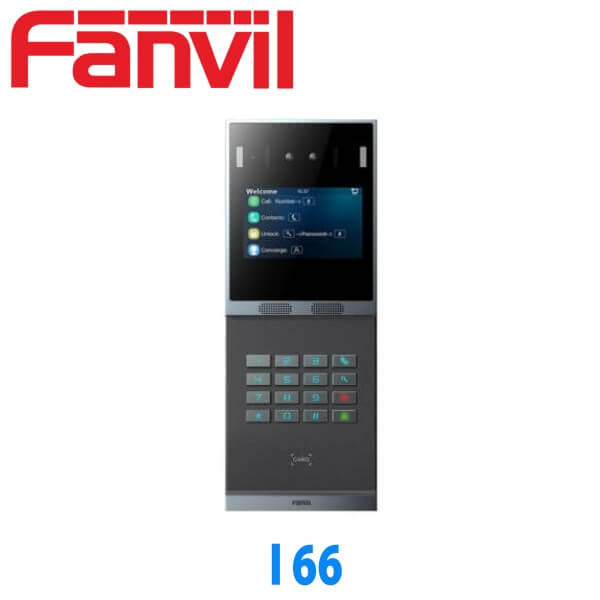
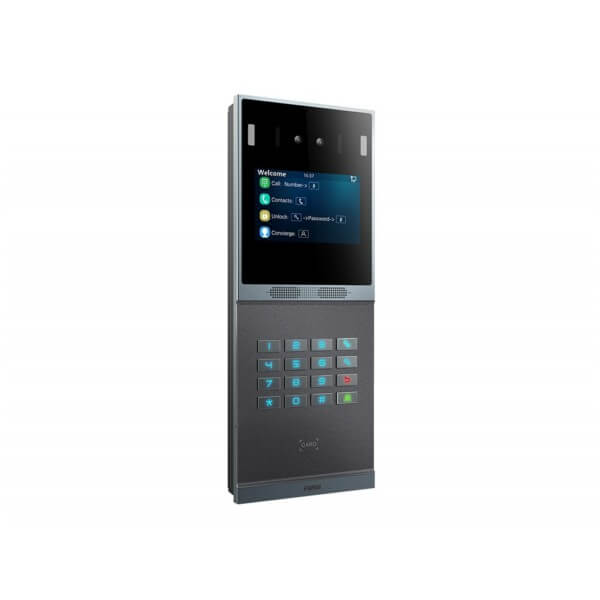
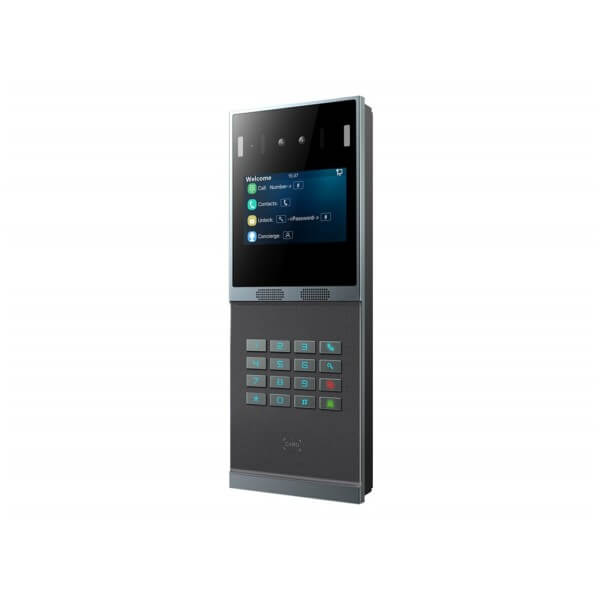
The Fanvil i66 is a 4-inch face recognition door phone for access-control and SIP video intercom projects. It sits at the entrance, calls IP phones or indoor stations, supports multiple ways to open the door, and gives the project team a cleaner answer than mixing separate devices from different systems.
What the Fanvil i66 is built for
The i66 is not a desk phone with a wall bracket. It is a SIP security device built for entrances: villa gates, apartment lobby doors, staff entrances, office reception doors, warehouse access points, and controlled doors inside commercial buildings. It uses SIP to place audio and video calls to compatible IP phones, indoor stations, or supported mobile-app workflows, so the person answering the call can speak to the visitor before releasing the door.
For a villa in Jumeirah or Emirates Hills, the i66 can call the indoor station or the homeowner’s configured endpoint. For an office in Business Bay, JLT, or DIFC, it can call reception during working hours and a security extension after hours. For a warehouse in JAFZA or Dubai Investment Park, it can sit at the staff gate or dispatch entrance and call the control desk without adding another analogue intercom system.
The front panel carries a 4-inch IPS colour screen and dual cameras. The screen gives visitors a guided access point instead of a blind button. The cameras support video intercom and face recognition. The project value is simple: the entrance becomes part of the SIP communication plan, not a separate island that nobody maintains after handover.
Face recognition at the entrance — where it makes sense
Face recognition is useful when the same people pass the same door every day: residents, staff, approved contractors, building management, warehouse teams, gym members, clinic staff, or office tenants. The i66 supports a 10,000-user capacity, which makes it suitable for more than a single-family gate. It can handle a multi-tenant building, staff entrance, compound gate, or project where card-only access creates too many replacement cards and reception interruptions.
It also supports anti-spoofing liveness detection for images, videos, and masks. In plain site language: the device is designed to check for a real person at the entrance, not just a flat photo held in front of the camera. That matters for apartment buildings, villas with staff access, and offices where access control is part of the security consultant’s scope.
Sizing the i66 for a project
Use the i66 where a 4-inch entrance screen is enough and the door needs face recognition, SIP video calling, and relay control. For larger lobby screens, compare it with the i67 and i68. For simpler video intercom without the same face-recognition requirement, compare it with the i64 or i60. Send us your door count, lock type, and answering point on WhatsApp and we confirm the right model.
SIP video intercom — not a retail doorbell
A project buyer should look at the i66 as a SIP endpoint first. It is installed at the entrance, registered to the site communication platform, and programmed to call the right destination. That destination may be a reception IP phone, a security desk, a Fanvil indoor station, or a configured mobile-app path. The visitor presses the call point, the person inside sees and hears the visitor, and the door can be released from the answering side when the project wiring supports it.
That SIP approach is why the i66 fits PABX replacement and ELV jobs in the UAE. The same integrator who is replacing an old office PABX can bring the front door into the new system. The same contractor wiring Cat6 to desks can pull one more cable to the entrance. The same support team that provisions the extensions can also test the door call before the site goes live.
The important point: SIP does not mean the i66 is making “many lines” like a desk phone. It is an entrance endpoint. It calls the programmed destination, handles visitor communication, and triggers access-control actions. Simultaneous call capacity depends on the platform, network, and call path behind it. We size it by door role, answering point, lock wiring, and user count — not by desk-phone line count.
Multiple door-opening methods for real sites
The i66 supports multiple access methods, including face recognition, card access, PIN, QR code, and DTMF opening from the answering side. That range matters because sites rarely use one access method for everyone. Residents may use face recognition. Cleaning staff may use cards. Temporary visitors may use QR codes. Reception may open the door by DTMF after a video call. Security may keep PIN access for backup or restricted use.
The hardware side is built for integration work: 3 short-circuit inputs, 2 relay outputs, Wiegand input/output, RS-485 support, and tamper alarm support. Those numbers are the difference between a door phone and a project access device. They give the ELV contractor room to connect lock release, exit button, door sensor, reader path, alarm input, or access-control panel logic depending on the site design.
For a single villa gate, that may be one relay to open the pedestrian gate and one input for the exit button. For an apartment lobby, it may mean one relay for the main door, one for a secondary lock, and integration with a card-reader path. For an office building, it may call reception during the day, security after hours, and keep access records under the building access-control workflow.
Dubai placement: heat, dust, rain, and the wall detail
Outdoor intercoms in Dubai fail for boring reasons: direct sun on the screen, water hitting the wall during cleaning, dust around the gate, weak cable termination, or a lock power supply nobody labelled. The i66 is rated IP66 for dust and water protection and IK07 for impact protection, but placement still matters. A shaded wall, correct mounting height, sealed cable entry, and labelled lock wiring make the installation easier to support later.
Wall mounting suits most villa and office entrances. For projects that need a cleaner embedded finish, the Fanvil EX103 flush mounting accessory is the correct family accessory for i66 and i67. For exposed wall-mounted locations, the RC02 rain cover is available for i66 and i67. We quote these accessories with the door phone when the site photo shows direct rain, direct washing, or an entrance wall where the device needs extra protection.
This is where Dubai supply from a telephony and ELV team matters. We don’t just ship the box. We check the lock type, confirm PoE availability, ask where the call should ring, stage the SIP registration, and test the call path before dispatch where the project quantity allows it. For UAE installation, our team covers Dubai, Abu Dhabi, Sharjah, Ajman, Ras Al Khaimah, Fujairah, and Umm Al Quwain.
Where the i66 fits in a Fanvil entrance system
A complete entrance system is usually more than one door phone. The i66 may sit at the main entrance, with a Fanvil indoor station inside the villa, apartment, or security room. In an office, it may call a Fanvil desk phone at reception. In a compound or building, it may be part of a wider Fanvil access and intercom design with larger face-recognition models at main doors and smaller video door phones at service doors.
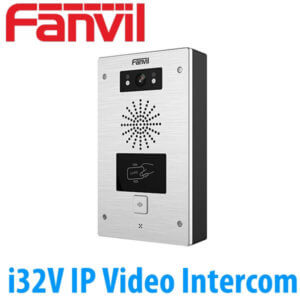
For buyers comparing models, start with the role of the door. If the site needs compact face recognition with a 4-inch screen, choose the i66. If the lobby entrance needs a larger screen, compare the i67 or i68. If the site needs video intercom without face-recognition access as the main buying reason, compare the Fanvil i60 door phone and the i64. For office projects where reception wants to see the entrance call and transfer internal calls from the same desk, pair the door phone with a suitable Fanvil desk phone from the Fanvil IP phone range.
Power and network truth for the i66
The Fanvil i66 supports PoE, so one network cable can carry both data and power from the comms room. That is the cleaner way to build an entrance point. No small adapter hidden behind the gate pillar. No power socket exposed near the wall box. No separate low-voltage cable pulled only because the door phone was chosen late.
For Dubai villa gates, apartment lobbies, office entrances, and warehouse staff doors, we prefer PoE from a labelled switch port or injector inside the secure cabinet. The lock power supply is still a separate access-control decision. PoE powers the door phone; it does not magically power every electric strike, maglock, exit button, or gate motor on the site.
Power adapter and lock power are quoted clearly
The i66 supports PoE. If the site does not have PoE at the entrance, we quote the correct power option in the same order. Door-lock power is separate from the door-phone power plan; we confirm the lock type before dispatch or installation.
The i66 uses a 10/100 Mbps Ethernet port, which is normal for a SIP door phone. It does not need Gigabit speed at the entrance. What matters more is stable cabling, a protected network path, correct VLAN or subnet planning where required, and enough switch power budget for every door device on the project.
Current i66 capabilities project buyers should not miss
The i66 is easy to undersell if it is described only as a “video door phone”. It is closer to a compact access terminal with SIP calling. The 4-inch IPS screen gives the visitor a proper interaction point. Dual 2MP cameras support video and face recognition. The 10,000-user capacity means the same model can move from a villa entrance to an apartment building, staff entrance, clinic, school admin block, or office tower access point.
Anti-spoofing liveness detection is the feature many local listings miss. The i66 is designed to detect images, videos, and masks instead of accepting a simple flat face image. That matters when the door is not watched every minute, or when access is being granted outside reception hours.
The integration count also matters: 3 short-circuit inputs, 2 relay outputs, Wiegand input and output, RS-485 support, and tamper alarm support. These are not brochure numbers. They decide whether the device can sit properly in a real ELV drawing. Exit button. Door contact. Auxiliary input. Reader path. Relay to strike. Relay to gate trigger. Tamper event. Those items need terminals, not promises.
The hidden question: who answers the door call?
Before we quote the i66, we ask where the call should ring: reception desk phone, guard room, indoor station, mobile-app path, or time-based call routing. That one answer changes the PABX rule, extension setup, access timing, and testing checklist. Send us your door count and answering plan on WhatsApp and we confirm the right model.
Platform compatibility in Dubai
The i66 uses standard SIP, so it can be registered as a door endpoint on common business telephony platforms used in UAE projects, including 3CX, Grandstream UCM, Yeastar, and Asterisk-based systems. On a normal office project, we create the door extension, set the call destination, test two-way audio and video where supported, and confirm the DTMF door-opening code with the site team.
For Etisalat and du environments, the usual design is to keep the i66 on the customer PABX or SIP platform, not as a public trunk device. The business SIP trunk connects the PABX to the outside world. The i66 sits inside the site network and calls internal destinations such as reception, security, or an indoor station. That keeps the entrance call controlled, logged, and easier to support.
During staging, Vector Digital Systems registers the door phone, applies the provisioning template where the platform supports it, programs the call button and access code behaviour, confirms the relay action, and makes test calls before dispatch on project quantities. For installation jobs in Dubai and other emirates, final testing includes the lock, exit button, door sensor, and answering device — not only the screen powering on.
Fanvil i66, i67, i68, or i60 — which door phone fits?
| Model | Screen | Access focus | Best fit |
|---|---|---|---|
| Fanvil i60 | Compact video door phone | SIP video intercom and door release | Service doors, smaller offices, entrances where face recognition is not the main requirement |
| Fanvil i66 — this model | 4-inch IPS colour screen | Face recognition, SIP video call, 10,000 users, 2 relays | Villa gates, apartment entrances, office doors, staff access points |
| Fanvil i67 | 7-inch IPS touch screen | Face recognition with larger visitor screen | Main lobbies, apartment receptions, entrances needing a bigger display |
| Fanvil i68 | 8-inch screen | Face recognition with larger entrance interface | Premium lobby access, high-visibility building entrances, larger visitor interaction point |
| Verdict | Choose the i60 if the entrance needs SIP video intercom without face recognition as the buying reason. Choose the i66 if you need compact face recognition with a 4-inch screen and project-grade access terminals. Choose the i67 if the same role needs a 7-inch touch screen. Choose the i68 if the entrance needs the largest screen in this comparison. | ||
For a multi-door building, the answer may be mixed. Main lobby on i67 or i68. Staff entrance on i66. Service door on i60. Reception answering on a Fanvil desk phone. See the Fanvil range comparison for the desk-phone side of the design, or pair the i66 with suitable indoor stations for villa and apartment projects.
Pricing, supply, and staging from Dubai
Vector Digital Systems supplies the Fanvil i66 from Dubai for ELV contractors, PABX installers, system integrators, villa contractors, access-control teams, and reseller projects. Same-day AED quotation is available on WhatsApp with VAT breakdown, delivery, accessories, and installation scope listed clearly. We don’t publish fixed prices because project scope changes the quote: wall mounting or flush mounting, PoE or adapter, number of doors, lock type, indoor station count, and whether UAE site installation is required.
For project quantities, we can stage units before dispatch: SIP account registered, call destination set, DTMF door-opening behaviour checked, relay action tested on the bench, device names labelled, and packing grouped by site or door number. That saves time on handover day, especially when the project has multiple entrances across Dubai, Abu Dhabi, or Sharjah.
Stock & Projects: Fanvil i66 supply from Dubai. Same-day quote in AED on WhatsApp. Supply and installation across all 7 UAE emirates. Project quantities, staging, provisioning, indoor-station pairing, and MEA export — FOB Dubai pricing on request.
Frequently asked questions
Will the Fanvil i66 work with our 3CX, Grandstream UCM, Yeastar, or Asterisk system?
Yes. The i66 uses standard SIP and can be registered as a door endpoint on 3CX, Grandstream UCM, Yeastar, and Asterisk-based systems. We configure the door extension, call destination, DTMF opening code, and test calls during staging or installation.
Does the Fanvil i66 come with a power adapter, or do I need PoE?
The i66 supports PoE, which is the preferred project setup because one cable powers and connects the door phone. If the site does not have PoE at the entrance, we quote the correct power option in the same order. Lock power is handled separately and depends on the electric strike, maglock, or gate trigger.
What does SIP mean on the Fanvil i66 — can it make several calls at once?
SIP means the i66 registers to your communication platform and calls a programmed destination such as reception, security, an indoor station, or a configured mobile-app path. It is an entrance endpoint, not a multi-line desk phone. Call handling depends on your PABX, routing plan, and answering devices.
Fanvil i66 vs i67 — what is the difference?
The i66 has a 4-inch IPS colour screen. The i67 has a larger 7-inch IPS touch screen. Both sit in the face-recognition door-phone family with 10,000-user capacity, 2 relay outputs, Wiegand input/output, RS-485 support, and PoE. Choose i66 for compact entrances and i67 where the visitor screen needs to be larger.
Can the Fanvil i66 open a villa gate or office door?
Yes, when wired correctly. The i66 has 2 relay outputs and supports door-opening methods such as face recognition, card, PIN, QR code, and DTMF opening from the answering side. We confirm the lock type, gate trigger, exit button, and power supply before quoting installation.
Does the Fanvil i66 work with an NVR or CCTV system?
The i66 is mainly a SIP video intercom and access-control endpoint. Where the project requires monitoring or recording, we check the required video path, network design, and NVR compatibility before confirming the scope. For reception viewing, it can call compatible IP phones, indoor stations, or supported app workflows.
Does Vector Digital Systems configure the Fanvil i66 before delivery?
Yes. For project orders, we can stage the i66 before dispatch: SIP registration, call destination, DTMF opening behaviour, relay test, device label, and basic call testing. On UAE installation jobs, final testing is done with the actual lock, exit button, door sensor, and answering device.
Is VoIP legal in the UAE and will the Fanvil i66 work with Etisalat or du?
Business VoIP over licensed operators is standard in the UAE under TRA regulation. The i66 normally sits on the customer PABX or SIP platform and calls internal destinations. Etisalat or du SIP trunks connect the PABX to external calling when required; the door phone itself is kept on the secure site network.
Is the Fanvil i66 covered under Fanvil warranty in the UAE?
Yes. Vector Digital Systems supplies the i66 with Fanvil manufacturer warranty support from Dubai. Warranty handling is easier when the unit is installed with correct PoE, protected cabling, labelled lock wiring, and documented network settings.
Who is the supplier of Fanvil i66 in Dubai?
Vector Digital Systems LLC is an authorised Fanvil supplier in Dubai, UAE, operating since 2009. We supply the Fanvil i66 with staging, provisioning, access-control coordination, installation across all seven emirates, warranty handling, and official quotations for procurement teams, ELV contractors, and system integrators.
What is the best face recognition door phone for villa gates and office entrances in Dubai?
For compact entrances needing face recognition, SIP video intercom, 10,000-user capacity, 2 relay outputs, PoE, and a 4-inch screen, the Fanvil i66 is the right Fanvil choice. For a larger lobby screen, step up to the Fanvil i67 or i68 depending on the entrance design.
Does Vector Digital Systems export Fanvil i66 from Dubai?
Yes. We export Fanvil i66 door phones from Dubai to telecom resellers, PABX installers, ELV contractors, and access-control integrators across Saudi Arabia, Oman, Qatar, Kuwait, Bahrain, Kenya, Tanzania, Uganda, Nigeria, and Ghana. FOB Dubai pricing is available with commercial invoice, packing list, certificate of origin, and Fanvil manufacturer warranty documentation.
UAE supply and installation coverage
Vector Digital Systems supplies and installs Fanvil i66 door phones across Dubai, Abu Dhabi, Sharjah, Ajman, Ras Al Khaimah, Fujairah, and Umm Al Quwain. We support villa gates, apartment entrances, office receptions, staff doors, clinic entrances, school admin blocks, warehouses, and free-zone fit-outs in locations such as DMCC, JLT, Business Bay, Dubai Silicon Oasis, JAFZA, Dubai Investment Park, and Dubai Internet City.
For multi-site projects, we handle the i66 under one engagement: door schedule, extension plan, staging batch, accessories, installation notes, and export or UAE delivery. That helps integrators keep the access-control and PABX sides aligned instead of treating the door phone as an afterthought.
MEA export from Dubai
Vector Digital Systems exports Fanvil i66 door phones from Dubai for telecom resellers, PABX installers, ELV contractors, and access-control integrators working across the Gulf and Africa. We regularly quote FOB Dubai for shipments to Saudi Arabia, Oman, Qatar, Kuwait, Bahrain, Kenya, Tanzania, Uganda, Nigeria, and Ghana, with project quantities packed and documented for onward clearance.
Export documentation can include commercial invoice, packing list, certificate of origin, and product details required by the buyer’s forwarder. Share the destination country, quantity, mounting type, and accessory requirement on WhatsApp, and we quote the i66 from Dubai with the right export terms.
Get a quote for Fanvil i66
Supply from Dubai · Same-day AED quote · Staging and installation · Project quantities and export