

Description
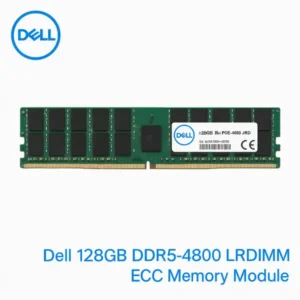
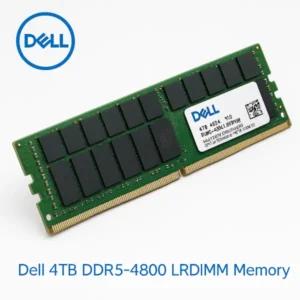
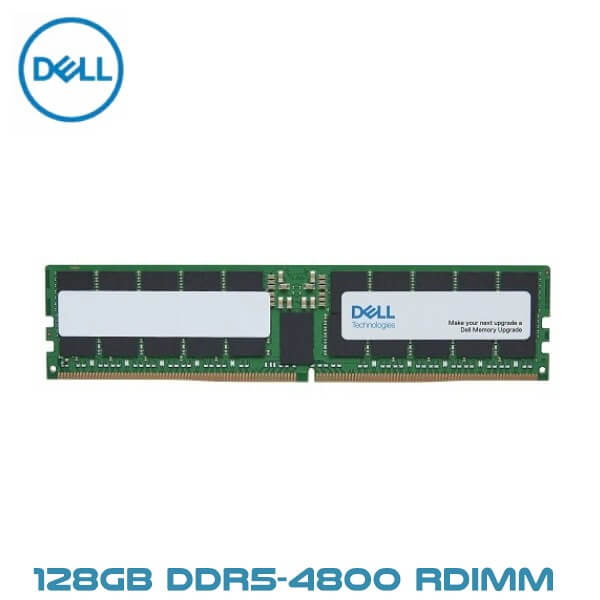
Dell 128GB DDR5-4800 RDIMM Memory Module for PowerEdge Servers in Dubai
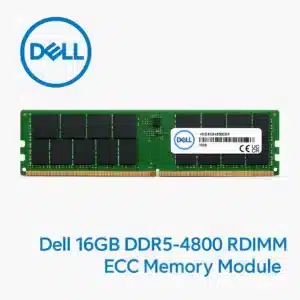
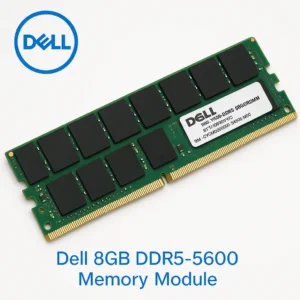
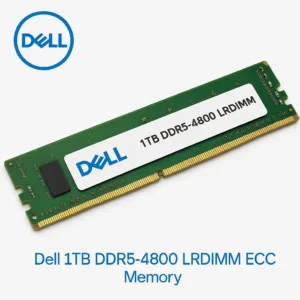
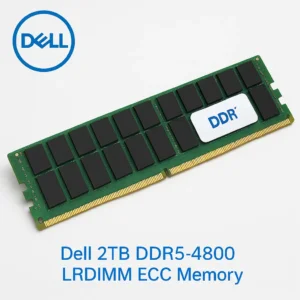
The Dell 128GB DDR5-4800 RDIMM memory module represents the latest advancement in server memory technology, delivering exceptional performance and capacity for enterprise applications in Dubai’s rapidly expanding data center ecosystem. This high-capacity memory module addresses the growing demands of memory-intensive workloads including virtualization, in-memory databases, and artificial intelligence applications that are driving digital transformation across the United Arab Emirates. As organizations in Dubai increasingly deploy applications that require substantial memory resources, the 128GB DDR5 RDIMM provides the memory foundation necessary to support these demanding requirements while delivering improved performance and energy efficiency.
Built on advanced DDR5 technology, this enterprise-grade memory module operates at 4800 MT/s (mega-transfers per second), providing significantly higher bandwidth compared to previous DDR4 generations. The massive 128GB capacity per module enables organizations to achieve unprecedented memory densities in their server configurations, supporting applications that require large amounts of system memory. The registered DIMM (RDIMM) design includes an additional register chip that improves signal integrity and enables higher capacity configurations, making it ideal for enterprise servers that need maximum memory capacity and reliability.
Advanced DDR5 Memory Technology
The Dell 128GB DDR5-4800 RDIMM incorporates the latest DDR5 memory technology, which provides substantial improvements in performance, capacity, and power efficiency compared to DDR4. The DDR5 standard introduces several architectural enhancements including improved prefetch capabilities, enhanced error correction, and better power management features. The 4800 MT/s operating speed delivers approximately 50% higher bandwidth compared to DDR4-3200, enabling faster data access and improved application performance.
The advanced memory architecture includes on-die ECC (Error Correcting Code) capabilities that provide an additional layer of data protection beyond traditional DIMM-level ECC. This dual-level error correction significantly improves system reliability and data integrity, which is crucial for mission-critical applications in Dubai’s financial services, healthcare, and government sectors. The enhanced error correction capabilities help prevent data corruption and system crashes that could impact business operations.
Power efficiency improvements in DDR5 technology reduce operating voltage from 1.2V in DDR4 to 1.1V in DDR5, resulting in lower power consumption per bit of data transferred. This power reduction is particularly valuable in data centers where memory can represent a significant portion of total system power consumption. For organizations in Abu Dhabi and throughout the UAE, the improved power efficiency translates to reduced cooling requirements and lower operational costs.
High-Capacity Memory Architecture
The 128GB capacity of this Dell DDR5 RDIMM represents a significant advancement in memory density, utilizing advanced memory chip stacking and packaging technologies to achieve unprecedented capacity in a standard DIMM form factor. The high capacity enables organizations to maximize memory density per server, reducing the number of servers required for memory-intensive applications while simplifying infrastructure management. This capacity increase is particularly valuable for virtualization platforms where memory requirements can scale dramatically with the number of virtual machines.
The registered DIMM design incorporates additional buffer chips that improve signal integrity and enable higher capacity configurations compared to unbuffered DIMMs. The register chip acts as a buffer between the memory controller and the memory chips, reducing electrical loading and enabling more DIMMs to be installed per memory channel. This design is essential for achieving maximum memory capacity in enterprise servers while maintaining signal integrity and reliability.
Advanced memory organization features include support for multiple memory ranks per DIMM, enabling efficient memory access patterns and improved performance for applications with diverse memory access requirements. The multi-rank design allows the memory controller to interleave memory accesses across different ranks, improving overall memory throughput and reducing latency for many types of workloads.
Performance Characteristics and Optimization
The Dell 128GB DDR5-4800 RDIMM delivers exceptional memory bandwidth with theoretical peak transfer rates of 38.4 GB/s per module. This high bandwidth is essential for applications that need to process large amounts of data rapidly, such as in-memory databases, real-time analytics, and high-performance computing workloads. The increased bandwidth enables faster data movement between memory and processors, reducing bottlenecks that could limit application performance.
Latency characteristics of DDR5 memory have been optimized to provide improved responsiveness for applications that require rapid memory access. While absolute latency may be slightly higher than DDR4 due to the increased complexity, the higher bandwidth and improved prefetch capabilities often result in better overall application performance. The memory controller optimizations in modern processors are specifically designed to take advantage of DDR5’s architectural improvements.
Enterprise Reliability and Error Correction
Enterprise-grade reliability features built into the Dell 128GB DDR5-4800 RDIMM include comprehensive error detection and correction capabilities that ensure data integrity and system stability. The dual-level ECC implementation provides both on-die ECC within individual memory chips and traditional DIMM-level ECC across the entire module. This redundant error correction approach significantly reduces the probability of uncorrectable errors and improves overall system reliability.
Advanced error logging and reporting capabilities provide detailed information about memory errors, enabling proactive maintenance and system optimization. The error reporting features integrate with Dell’s OpenManage systems management tools, providing centralized monitoring and alerting for memory-related issues. This monitoring capability is essential for maintaining high availability in mission-critical environments where memory errors could impact business operations.
Thermal management features within the DDR5 specification include improved temperature monitoring and thermal throttling capabilities that protect the memory from overheating while maintaining optimal performance. The enhanced thermal management is particularly important in high-density server configurations where multiple high-capacity memory modules generate substantial heat. The thermal protection features help ensure reliable operation even under demanding workload conditions.
Dell PowerEdge Server Compatibility
The Dell 128GB DDR5-4800 RDIMM is specifically validated and optimized for integration with Dell PowerEdge servers that support DDR5 memory technology. Supported server models include the latest generation PowerEdge R760, R660, R560, R460, and R360 series, each designed to take full advantage of DDR5’s performance and capacity improvements. Dell’s comprehensive testing and validation processes ensure that the memory modules will operate reliably and achieve specified performance levels.
Memory configuration optimization is crucial for achieving maximum performance from DDR5 memory systems. Dell PowerEdge servers include sophisticated memory controllers that can automatically optimize memory timing and configuration parameters based on the installed memory modules. The optimization features help ensure that organizations achieve the best possible performance from their memory investments without requiring manual tuning or configuration.
Hot-swap and hot-add capabilities in supported Dell PowerEdge servers enable memory upgrades and replacements without system downtime, which is crucial for maintaining high availability in mission-critical environments. The memory modules include comprehensive identification and configuration information that allows the system to automatically detect and configure new memory modules when they are installed.
Application Use Cases and Workload Optimization
Virtualization platforms represent one of the primary use cases for the Dell 128GB DDR5-4800 RDIMM, where the high capacity enables organizations to run more virtual machines per physical server while maintaining optimal performance. The large memory capacity is particularly valuable for memory-intensive virtual machines such as database servers, application servers, and virtual desktop infrastructure (VDI) deployments. The improved bandwidth and capacity allow for better virtual machine density and improved performance isolation between VMs.
In-memory database applications benefit tremendously from the high capacity and performance characteristics of DDR5 memory. Databases such as SAP HANA, Oracle TimesTen, and Microsoft SQL Server In-Memory OLTP can store entire datasets in memory, eliminating disk I/O bottlenecks and dramatically improving query performance. The 128GB capacity per module enables organizations to build systems with terabytes of memory capacity, supporting even the largest in-memory database deployments.
Artificial intelligence and machine learning workloads require substantial memory capacity for storing training datasets, model parameters, and intermediate results. The high-capacity DDR5 memory enables organizations to work with larger datasets and more complex models without being constrained by memory limitations. The improved bandwidth also accelerates data movement during training and inference operations, reducing overall processing time.
High-Performance Computing Applications
Scientific computing and engineering simulation applications leverage the high memory capacity and bandwidth for processing complex mathematical models and large datasets. Applications in fields such as computational fluid dynamics, finite element analysis, and molecular modeling benefit from the ability to keep entire problem sets in memory, eliminating the need for time-consuming disk I/O operations. Organizations in Dubai’s oil and gas, aerospace, and research sectors find significant performance improvements when using high-capacity DDR5 memory.
Big data analytics platforms including Apache Spark, Hadoop, and Elasticsearch benefit from the large memory capacity for caching frequently accessed data and intermediate results. The ability to keep more data in memory reduces the need for disk access and improves query performance for interactive analytics applications. The high bandwidth also accelerates data movement during complex analytics operations.
Power Management and Efficiency
The Dell 128GB DDR5-4800 RDIMM incorporates advanced power management features that optimize energy consumption based on workload requirements. The DDR5 specification includes multiple power states that can be dynamically adjusted to reduce power consumption during idle periods while ensuring rapid response when high performance is needed. These power management features are particularly valuable in data centers where memory power consumption can represent a significant portion of total system power.
Voltage regulation improvements in DDR5 technology include on-module voltage regulation that provides more precise power delivery and reduces power consumption. The improved voltage regulation also enhances signal integrity and enables higher operating frequencies while maintaining reliability. For organizations in the UAE with large server deployments, these power efficiency improvements can result in substantial cost savings over the lifetime of the equipment.
Thermal efficiency improvements help reduce cooling requirements in data centers, which is particularly important in Dubai’s climate where cooling costs can represent a significant portion of operational expenses. The lower operating voltage and improved power management features reduce heat generation, enabling higher memory densities without proportional increases in cooling requirements.
Memory Configuration and Optimization
Optimal memory configuration strategies for the Dell 128GB DDR5-4800 RDIMM depend on the specific application requirements and server platform capabilities. For maximum capacity configurations, organizations can install multiple modules per memory channel, taking advantage of the registered DIMM design to achieve very high memory densities. For performance-optimized configurations, distributing memory modules across multiple channels and processors can maximize memory bandwidth and reduce latency.
Memory interleaving and optimization features in Dell PowerEdge servers automatically configure memory access patterns to maximize performance based on the installed memory configuration. The optimization algorithms take into account factors such as memory capacity, speed, and topology to determine the best configuration for the specific workload requirements. These automatic optimization features help ensure that organizations achieve optimal performance without requiring detailed knowledge of memory subsystem architecture.
Performance monitoring and tuning capabilities provide real-time visibility into memory utilization, bandwidth consumption, and error rates. These monitoring features help administrators optimize memory configurations and identify potential performance bottlenecks. The detailed performance metrics are particularly valuable for organizations with demanding performance requirements or those operating mission-critical applications.
Quality Assurance and Testing
The Dell 128GB DDR5-4800 RDIMM undergoes comprehensive quality assurance testing to ensure reliable operation in enterprise environments. The testing process includes extensive burn-in procedures, temperature cycling, and stress testing under various workload conditions. Dell’s quality assurance processes are designed to identify potential issues before the memory modules are deployed in production environments, ensuring high reliability and consistent performance.
Compatibility testing with Dell PowerEdge servers ensures that the memory modules will operate correctly with all supported server configurations and firmware versions. The testing process includes validation of memory timing parameters, error correction functionality, and thermal characteristics under various operating conditions. This comprehensive testing provides confidence that the memory modules will perform reliably in demanding enterprise environments.
Long-term reliability testing includes accelerated aging procedures that simulate years of operation in compressed timeframes. These tests help validate the expected lifespan of the memory modules and identify any potential reliability issues that could impact long-term operation. The reliability testing is particularly important for organizations that require predictable performance and minimal maintenance over extended periods.
Support and Warranty
Dell provides comprehensive support for the 128GB DDR5-4800 RDIMM through its global support organization, with local support available in Dubai and throughout the UAE. The support services include technical assistance, firmware updates, and replacement services that help ensure optimal operation throughout the product lifecycle. Dell’s support organization has extensive experience with enterprise memory systems and can provide expert guidance for optimization and troubleshooting.
Warranty coverage includes protection against manufacturing defects and premature failure, providing peace of mind for organizations making substantial memory investments. The warranty terms are designed to provide adequate protection while recognizing the demanding nature of enterprise computing environments. Dell’s warranty services include advance replacement options that minimize downtime in the event of memory module failure.
Documentation and technical resources provide detailed information about memory configuration, optimization, and troubleshooting procedures. The documentation includes best practices guides, configuration examples, and performance tuning recommendations that help organizations maximize their memory investments. These resources are particularly valuable for organizations that are new to DDR5 technology or those upgrading from previous memory generations.