
Description
Dell PowerEdge R770AP Dubai 17G Low-Latency Server
When every millisecond in the rack has a cost
A trading application starts missing its timing window. A risk engine finishes later than the desk expects. A real-time analytics job that used to feel instant now sits in the queue behind storage calls, memory pressure, and mixed workloads that were never planned properly.
That is when a normal 2U server stops being enough.
The requirement is not just more cores. It is predictable cores. Fast memory. NVMe storage without a legacy storage layer in the way. Remote management that your infrastructure team can trust from Dubai, Abu Dhabi, or a colocation cage at Equinix DX1. The server must behave the same way at 10:00 AM during market load as it does during an overnight batch run.
The Dell PowerEdge R770AP is built for that conversation. It is a 17th Generation 2U rack server with dual Intel Xeon 6 P-core processors, DDR5-6400 memory, PCIe Gen5 expansion, NVMe-first storage, and iDRAC10 remote management. Not a general SMB server. Not a GPU platform. A focused compute system for deterministic performance.
Vector Digital Systems supplies and installs the R770AP for UAE enterprise buyers who already know why latency matters. DIFC trading firms. ADGM financial platforms. Analytics teams sitting behind Etisalat or du enterprise links. Colocation deployments where power, cooling, firmware, and warranty cannot be left vague.
We have been working with Dell server infrastructure in Dubai since 2009. The R770AP is the kind of server where the configuration matters as much as the model name. Processor bin. DIMM population. NVMe layout. PSU choice. iDRAC10 setup. Warranty level. Get one of those wrong and you lose the reason for buying this platform in the first place.
What the R770AP is — and who it is built for
The R770AP sits in Dell’s 17G PowerEdge line as a specialist 2U system. The “AP” angle matters. This is a performance-focused platform using Intel Xeon 6 P-core processors, not a broad entry server and not a GPU-dense AI box. It is for buyers who need CPU speed, memory bandwidth, NVMe I/O, and predictable execution under load.
The first buyer is the financial technology team. A firm in DIFC or ADGM running trading applications, pricing engines, market data processing, fraud scoring, or risk calculations. The workload is time-sensitive. It may not need GPUs. It may not need 200TB of cheap capacity. It needs fast CPU paths, low storage delay, and a server that can be managed without sending an engineer into the rack every time firmware or diagnostics are required.
The second buyer is the enterprise database team. SQL Server, PostgreSQL, Oracle workloads, high-write analytics stores, in-memory applications, and data pipelines that suffer when storage latency is inconsistent. The R770AP gives you dual-socket compute, DDR5 memory, and Gen5 NVMe drive options in the same 2U footprint.
The third buyer is the infrastructure architect building a platform refresh. Moving from older 14G or 15G PowerEdge servers into 17G is not a small step. You are moving to DDR5 at 6400 MT/s, PCIe Gen5, iDRAC10, new PERC architecture, and a more telemetry-rich server management layer. For a Dubai data centre rack where cooling cost and power density already matter, those details affect design.
The R770AP is not the right server for every workload. It has no GPU support. If the project is LLM fine-tuning or GPU-heavy AI inferencing, the PowerEdge XE7745 belongs in the conversation instead. If the requirement is a branch-office file server, the R360 or R260 makes more sense. If the requirement is deterministic CPU compute and NVMe speed in 2U, the R770AP is the model to look at.
17th Generation platform leap
The R770AP is a 17G PowerEdge server. That means Intel Xeon 6 P-core processors, DDR5 memory up to 6400 MT/s, PCIe Gen5 expansion, NVMe-focused storage, and iDRAC10 management. It should not be compared like-for-like with a 15G or 16G server unless the workload, licensing, and refresh plan are being checked together.
Dell PowerEdge R770AP specifications
Below are the practical specifications that matter before procurement signs off. Not brochure wording. The parts that decide whether this server fits the rack, the workload, the warranty plan, and the next five years of infrastructure.
| Specification | Detail |
|---|---|
| Generation | 17th Generation Dell PowerEdge |
| Form Factor | 2U rack server |
| Chassis Depth | 31.59 inches with bezel / 31.56 inches without bezel |
| Processor | 2 x Intel Xeon 6 6900-series P-core processors |
| Maximum CPU Cores | Up to 128 cores per processor / up to 256 cores total |
| Memory Slots | 24 x DDR5 RDIMM slots |
| Maximum Memory | Up to 3TB registered ECC DDR5 |
| Memory Speed | Up to 6400 MT/s |
| Storage Options | Up to 16 x 2.5-inch Gen5 NVMe or up to 32 x EDSFF E3.S Gen5 NVMe drives |
| Maximum Storage | Up to 491.52TB with EDSFF E3.S NVMe configuration |
| RAID Controller | PERC H975i DC-MHS front |
| Boot Option | BOSS-N1 DC-MHS internal boot, HWRAID 1, 2 x M.2 NVMe SSDs |
| Remote Management | iDRAC10 with Lifecycle Controller, Redfish API, RACADM CLI |
| PCIe Expansion | Up to 5 x PCIe Gen5 x16 slots |
| OCP Networking | Up to 2 x OCP NIC 3.0 options |
| GPU Support | No GPU support |
| Cooling | Air cooling with up to 6 hot-swappable fans |
| Power Supplies | 1500W, 1800W, 2400W or 3200W Titanium hot-swap redundant PSU options |
| Operating Systems | Windows Server, VMware ESXi, VMware vSAN, RHEL, SUSE Linux Enterprise Server, Ubuntu Server LTS |
Processor platform — Intel Xeon 6 P-core
The R770AP supports two Intel Xeon 6 6900-series P-core processors. P-core means performance core. That matters because this server is not trying to mix every workload type into one box. It is designed for workloads where high per-core performance, timing consistency, and dense CPU execution carry more value than a generic core-count headline.
Dell lists support up to 128 cores per processor, giving a maximum platform count of up to 256 cores across two CPUs. That is serious compute density in 2U. But the bigger point is not just the total number. It is the way those cores fit into workloads that need steady CPU behaviour: trading engines, risk models, real-time database operations, fraud detection, analytics platforms, and private enterprise compute clusters.
For Dubai financial infrastructure, that distinction is not academic. A trading firm near DIFC or a risk platform serving ADGM clients may care less about how many virtual machines can be squeezed onto a host and more about whether the application finishes the same calculation within the same time window under pressure. Processor selection, memory channel population, and NVMe layout all affect that.
P-core only positioning
The R770AP should be specified as a deterministic compute server, not a mixed-purpose branch server. Choose the processor based on workload timing, software licensing, core requirement, and thermal design. For licensed database workloads, the CPU choice can affect both performance and software cost.
Memory — 24 DIMM slots, DDR5-6400, up to 3TB
The R770AP uses DDR5 registered ECC memory. Maximum memory is up to 3TB across 24 DIMM slots, with supported speeds up to 6400 MT/s depending on processor, DIMM type, and population. For older PowerEdge buyers moving from DDR4 platforms, this is one of the clearest 17G differences.
ECC is not optional in this class of server. It corrects memory errors before they become application faults, database corruption, or unexplained instability. For a server running financial workloads, ERP databases, real-time analytics, or high-density virtualisation, uncorrected memory errors are not a small risk. They are downtime waiting to happen.
Memory population should be planned before ordering. A server with powerful CPUs and poorly balanced DIMMs can leave performance on the table. For latency-sensitive workloads, we normally check application profile, VM count, database size, and growth forecast before proposing a DIMM layout. Filling memory just to hit a number is not the same as building the server correctly.
For UAE buyers, this is also where project cost changes quickly. DDR5 capacity, DIMM rank, and validated Dell part availability affect quote value. That is why the R770AP should be quoted against workload, not as a one-line “base server” price.
Storage — Gen5 NVMe, including EDSFF E3.S
Storage is where the R770AP separates itself from general 2U servers. This is an NVMe-focused platform. Supported configurations include up to 16 x 2.5-inch Gen5 NVMe SSDs or up to 32 x EDSFF E3.S Gen5 NVMe drives, with maximum listed capacity up to 491.52TB in the EDSFF E3.S layout.
That matters for workloads where storage delay shows up immediately. High-write databases. Market data capture. Analytics systems reading hot data repeatedly. Search indexes. Transaction-heavy applications. A conventional SAS or SATA storage design may be cheaper, but it does not belong under the same workload profile.
EDSFF E3.S is also worth understanding before purchase. It is not just a different physical drive shape. It gives dense enterprise NVMe packaging in a front-access server design. For a 2U rack in a Dubai colocation facility, that can reduce the number of servers needed to hit a performance and capacity target.
The R770AP can be configured with PERC H975i DC-MHS front storage control and BOSS-N1 DC-MHS internal boot. The boot design is important. It keeps the operating system on dedicated internal M.2 NVMe media using hardware RAID 1, separate from the application and data drives. Cleaner failure domain. Cleaner rebuild path. Cleaner handover to the infrastructure team.
OS and hypervisor licences are not included
The PowerEdge R770AP ships as server hardware unless software is quoted separately. Windows Server, VMware ESXi, VMware vSAN, RHEL, SUSE, and database licences require separate licensing. For per-core licensed workloads, processor choice can change the full project cost.
RAID, boot, and drive layout
The storage controller listed for the R770AP is PERC H975i DC-MHS front. This is not the same storage conversation as an entry rack server with simple SATA drives. NVMe performance, RAID policy, boot isolation, drive endurance, and serviceability must all be checked together.
For operating system boot, the BOSS-N1 DC-MHS option supports hardware RAID 1 with two M.2 NVMe SSDs. We usually recommend this approach for production servers. It keeps the OS away from the main front drive bays, simplifies rebuilds, and makes storage planning cleaner for the application layer.
A risk platform does not need the same drive layout as a virtualisation cluster. A high-write database does not need the same endurance profile as a mostly read-heavy analytics node. A VMware host in Khazna or Equinix colocation may need a different network and storage balance from a server installed in a private enterprise rack in Business Bay.
This is where Vector Digital Systems spends time before quoting. We confirm drive count, RAID plan, boot option, usable capacity, endurance, warranty, and expected replacement path. Server storage mistakes are expensive because they are usually discovered after the workload is already live.
iDRAC10 management — why 17G feels different in operation
The R770AP uses iDRAC10. For an IT manager, this is one of the main reasons to care about 17G beyond CPU and memory. iDRAC10 gives out-of-band server control, hardware telemetry, Redfish API access, RACADM CLI, Lifecycle Controller, and remote console capability even when the operating system is not behaving.
That last part matters. When Windows Server hangs, VMware stops responding, or a Linux host drops from the cluster, iDRAC10 is still reachable through its own management path. You can check hardware health, review logs, mount virtual media, update firmware, power cycle the server, and work through diagnostics without waiting for somebody to stand in front of the rack.
For UAE infrastructure teams running racks across Dubai, Abu Dhabi, Sharjah, or colocation facilities, remote management is not a convenience. It reduces travel, reduces after-hours callouts, and gives the support team a clean way to see the server before touching production workloads.
iDRAC10 also fits larger management designs through OpenManage Enterprise and API-based automation. If the R770AP is part of a multi-server deployment, that becomes important. Firmware baselines, alerts, inventory, and lifecycle activity should not be handled one server at a time in a browser tab.
iDRAC10 vs iDRAC9
iDRAC10 is Dell’s 17G management layer. It builds on the iDRAC9 model used in 15G and 16G servers with stronger telemetry, modern API coverage, and updated lifecycle controls. For multi-server deployments, configure iDRAC10 from day one with management VLAN access, alerting, role-based users, and firmware baseline policy.
We configure iDRAC during installation as standard. Dedicated management IP. Firmware baseline. Access credentials. Alert routing. Remote console check. Service tag check. Too many servers are installed with iDRAC left half-finished, which defeats the point of paying for enterprise hardware.
The R770AP is a serious server. It should not be delivered as a sealed carton and left for the customer to discover the management layer later. The management setup is part of the deployment.
Operating system support
The R770AP supports major enterprise operating systems and hypervisors, including Microsoft Windows Server, VMware ESXi, VMware vSAN, Red Hat Enterprise Linux, SUSE Linux Enterprise Server, and Ubuntu Server LTS. The right choice depends on workload and licensing, not preference alone.
For Microsoft environments, Windows Server Standard or Datacenter licensing must be sized against cores and virtualisation rights. For VMware environments, the host design must account for CPU selection, memory capacity, storage type, vSAN requirements if used, and network adapters. For Linux database or analytics workloads, kernel, driver, firmware, and monitoring compatibility should be checked before production handover.
Vector Digital Systems can supply the server hardware, Dell warranty, OS licensing, installation, rack deployment, and handover as one project. That is usually cleaner than buying server hardware from one place, licences from another, and then asking the internal IT team to make the pieces work under deadline.
Stock & Availability: Dell PowerEdge R770AP available in Dubai on quote. Same-day configuration response on WhatsApp. CTO and project options available. Dell ProSupport and ProSupport Plus warranty can be quoted with the server. FOB Dubai pricing available for Africa, GCC, and South Asia export projects.
Power and cooling in UAE racks
The R770AP is not a small server pretending to be enterprise hardware. It is a dense 2U platform with dual Intel Xeon 6 P-core processors, DDR5 memory, Gen5 NVMe storage, and PCIe Gen5 expansion. Power and cooling need to be planned before the purchase order, not after delivery.
Dell lists 1500W, 1800W, 2400W, and 3200W Titanium hot-swap redundant power supply options for the R770AP. The correct PSU choice depends on processor selection, memory population, NVMe drive count, PCIe card load, redundancy target, and rack power budget. A low-drive configuration in an enterprise office rack is not the same as a dense NVMe build inside a colocation cage.
Cooling is air-based, with up to 6 hot-swappable fans. That makes the R770AP easier to place than a liquid-cooled platform, but it still needs proper rack airflow. Dubai server rooms see harsh ambient conditions outside the building. Even when the room is air-conditioned, poor rack layout, blocked front panels, mixed hot and cold air, or undersized UPS systems can raise fan speed and power draw.
For Equinix DX1, Khazna, Gulf Data Hub, or a private rack in a DIFC office, we check depth, power circuit, PDU type, airflow path, UPS runtime, and network drop location before installation. A 31.59-inch deep 2U chassis needs the right cabinet depth and cable clearance. That sounds basic until a server arrives at site and the rear door will not close.
Dubai deployment note
For R770AP builds, confirm rack depth, PDU rating, UPS capacity, airflow, and maintenance access before ordering. The server is 2U, but its depth and power profile belong in a planned enterprise rack, not a shallow wall cabinet.
Grey market warning — check the service tag before you buy
New-generation Dell servers attract grey-market listings in the UAE. The price may look lower. The risk is hidden in the service tag.
Dell PowerEdge warranty is tied to the service tag. That tag confirms region, warranty start date, service level, parts entitlement, and support path. If the server came through an unauthorised import channel, the tag may not show valid UAE coverage. It may show a different region. It may have missing warranty. It may not match the configuration being sold.
For an R770AP, that risk is not acceptable. This is not a desktop PC. It may sit under a trading platform, a risk engine, a database tier, or a private compute cluster. If a PSU, NVMe drive, system board, or fan module fails, the support path must already be clean. Not negotiated during an outage.
Vector Digital Systems supplies through authorised Dell Technologies channels. We validate the service tag, quote Dell warranty options, and hand over the server with proper documentation. That is the difference between buying a box and buying infrastructure that can be supported when the rack is under pressure.
Do not treat warranty as an afterthought
Ask for the Dell service tag, warranty level, region, and coverage term before purchase. For production R770AP deployments in UAE, 3-year ProSupport or ProSupport Plus is usually the practical starting point.
What Vector Digital Systems provides with the R770AP
Vector Digital Systems is an authorised Dell Technologies partner in Dubai, operating since 2009. We supply Dell PowerEdge servers across all 7 UAE emirates — Dubai, Abu Dhabi, Sharjah, Ajman, Ras Al Khaimah, Fujairah, and Umm Al Quwain.
For the R770AP, our work starts before the quote. We confirm the workload, processor target, memory requirement, NVMe drive layout, boot design, RAID policy, network adapter requirement, PSU sizing, rack depth, warranty level, and OS licensing. That prevents the common mistake: buying a high-end server with a weak configuration underneath it.
Installation and rack deployment are standard VDS services. We rack the server, cable it, configure iDRAC10, update firmware where required, confirm service tag visibility, create the management access handover, and assist with OS or hypervisor installation. For VMware ESXi, Windows Server, RHEL, SUSE, and Ubuntu Server deployments, we can supply hardware and licensing as one project.
We also support post-installation work: firmware planning, Dell warranty renewal, spare drive and memory upgrades, iDRAC health checks, configuration backup, and annual maintenance contracts. For teams running Etisalat Business or du Enterprise connectivity between sites, remote management and alerting are set up so hardware faults do not wait for somebody to visit the rack.
This is the practical difference. You do not just receive an R770AP. You receive the correct R770AP for your workload, configured and installed by a team that understands Dubai infrastructure rooms, colocation cages, procurement approvals, and Dell warranty processes.
Stock and availability in Dubai
Stock & Availability: Dell PowerEdge R770AP available in Dubai on quote. Same-day WhatsApp response for CTO and project configurations. Dell ProSupport and ProSupport Plus options available. Project quantities for enterprise buyers and resellers. FOB Dubai pricing for Africa, GCC, and South Asia.
R770AP pricing should be quoted against a real configuration. A dual-socket Xeon 6 server with 24 DIMM slots and NVMe storage can change price sharply depending on CPU model, memory capacity, EDSFF or 2.5-inch drive layout, PERC selection, PSU size, networking, warranty, and OS licensing.
Send the workload details by WhatsApp: application, user count, VM count if any, database size, storage target, preferred OS, rack location, and warranty term. We will come back with a specific configuration and price. No fixed AED price is shown on this page because server pricing changes with configuration and availability.
Frequently asked questions — Dell PowerEdge R770AP Dubai
What generation is the Dell PowerEdge R770AP?
The R770AP is a 17th Generation Dell PowerEdge server. It brings Intel Xeon 6 P-core processors, DDR5 memory up to 6400 MT/s, PCIe Gen5 expansion, Gen5 NVMe storage, and iDRAC10 management. For UAE buyers replacing 14G or 15G systems, this is a major platform jump.
What processors does the R770AP support?
The R770AP supports two Intel Xeon 6 6900-series P-core processors, with up to 128 cores per processor and up to 256 cores total. Processor selection should be based on workload timing, licensing, memory design, and thermal profile, especially for financial trading and database workloads.
Does the R770AP use DDR4 or DDR5 memory?
The R770AP uses DDR5 registered ECC memory only. It supports up to 3TB across 24 DIMM slots, with memory speeds up to 6400 MT/s depending on configuration. It is not compatible with DDR4 memory from older 14G or 15G Dell servers.
What RAID controller is available for the R770AP?
The listed storage controller is PERC H975i DC-MHS front. For boot, the R770AP supports BOSS-N1 DC-MHS internal boot with hardware RAID 1 using two M.2 NVMe SSDs. We normally recommend separating OS boot from the main NVMe application drive set.
Does the R770AP support GPUs?
No. The R770AP is not a GPU server. It is a CPU-dense, NVMe-focused 2U platform for deterministic compute. If the requirement is GPU AI inferencing or LLM work, ask for the PowerEdge XE7745 instead.
What Dell warranty options are available in UAE?
Dell Basic, ProSupport, and ProSupport Plus options can be quoted for 1-year, 3-year, or 5-year terms depending on the project. For production R770AP deployments in Dubai, 3-year ProSupport is the common baseline, with ProSupport Plus used where downtime cost is high.
Comparable Dell PowerEdge models
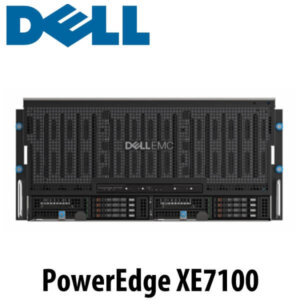
Need GPU density? Look at the Dell PowerEdge XE7745. It is a 17G 4U air-cooled AI server for up to 8 double-wide GPUs or 16 single-wide GPUs. The R770AP is the CPU-focused choice. The XE7745 is the GPU choice.
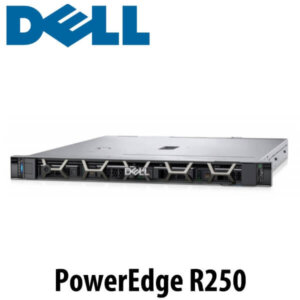
Need an entry 2U office server? The Dell PowerEdge R360 is a better fit for SMB workloads, file serving, backup, and light virtualisation. It is 16G, single-socket, and priced for smaller environments.
Need a short-depth 1U edge server? The Dell PowerEdge R260 fits shallow racks and branch sites where rack depth is limited.
Expanding an existing 15G cluster? The Dell PowerEdge R550 is still relevant when you need matching 15G DDR4 nodes for cluster expansion or unit replacement.
See the full Dell PowerEdge server range in Dubai for 1U, 2U, 4U, entry, enterprise, low-latency, and AI server options supplied by Vector Digital Systems.
MEA and Africa export from Dubai
Vector Digital Systems supplies Dell PowerEdge servers for UAE and export projects from Dubai. The R770AP fits enterprise and financial-sector deployments across Saudi Arabia, Qatar, Kuwait, Oman, Bahrain, Iraq, Jordan, Kazakhstan, South Africa, Kenya, and Nigeria. FOB Dubai pricing is available for multi-unit procurement, project resellers, and regional infrastructure rollouts.
Export quotes can include Dell warranty options, CTO configuration, packing, documentation, and freight coordination. For enterprise R770AP projects, send the destination country, configuration target, quantity, and warranty term by WhatsApp. We will confirm what can be supplied from Dubai and what needs Dell CTO lead time.
About Vector Digital Systems — Authorised Dell Technologies Partner
Vector Digital Systems is an authorised Dell Technologies partner in Dubai, UAE, supplying the Dell PowerEdge R770AP with installation and rack deployment across all 7 UAE emirates — Dubai, Abu Dhabi, Sharjah, Ajman, Ras Al Khaimah, Fujairah, and Umm Al Quwain. Dell ProSupport and ProSupport Plus warranty options available. Export to Africa, GCC, and international markets — FOB Dubai pricing on request. Operating since 2009. Contact: +971 4 450 4145 · Monday–Saturday 8AM–6PM.
Get a quote for Dell PowerEdge R770AP
Available in Dubai · CTO and project configurations · Dell warranty options · Installation and rack deployment