
Description
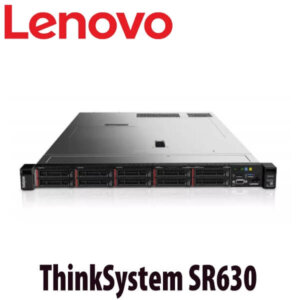
Lenovo ThinkSystem SR630 V3 Dubai 1U Rack Server
When the rack is full, every U has to earn its space.
You’ve got six or eight servers already sitting in the cabinet. Maybe it’s a small private cloud in Dubai. Maybe a hosting stack in Equinix DX1. Maybe a JAFZA company running ERP, file services, domain controllers, SQL, backup, and a few application servers that nobody wants to touch because they’ve been working for years.
The problem is not always performance. Sometimes the problem is space. A 2U server is fine when you have spare rack capacity. But when you’re paying for colocation, cooling, power, cross-connects, and cage space, 1U matters. That’s where the Lenovo ThinkSystem SR630 V3 fits. It gives you dual-socket Intel Xeon compute, DDR5 memory, PCIe Gen5 expansion, and Lenovo XClarity Controller 2 remote management in a 1U rack chassis.
This is not the server for people who want the biggest chassis. It is for teams that need compute density. Virtualisation clusters. Web hosting nodes. Application servers. Database nodes. Monitoring servers. Security appliances. Build servers. Edge-of-core workloads where the cabinet is already busy and the next purchase has to be efficient.
V3 Generation — Current Mainstream 1U Platform
The ThinkSystem SR630 V3 is a V3 generation Lenovo 1U rack server. It sits on the Intel Xeon 4th/5th Gen Scalable platform with DDR5 memory and PCIe Gen5 expansion. For Dubai buyers, the SR630 V3 makes sense when rack density matters more than large internal storage capacity. If you want more drive bays, look at SR650 V3. If you want 1U compute density, this is the correct family.
What the SR630 V3 is built for
The SR630 V3 is a 1U dual-socket rack server for workloads that need CPU and memory density more than a large local disk footprint. That matters in Dubai data centres because not every workload belongs on a 2U box. If your storage is already on SAN, NAS, vSAN, Ceph, or a dedicated backup appliance, a 1U compute node often gives a cleaner design.
For virtualisation, SR630 V3 works well as a cluster node where each host carries a balanced mix of CPU cores, DDR5 memory, NVMe boot drives, and 10GbE or 25GbE networking. For web hosting, it gives more compute per rack unit, which helps when you’re packing customer workloads into a fixed colocation footprint. For application servers, it keeps the rack tidy. For monitoring, logging, security tools, and internal platforms, it gives enough headroom without wasting rack space.
A common UAE deployment is three SR630 V3 servers as a small HA cluster: two production nodes and one failover or maintenance node. Another common build is four or six SR630 V3 units in a hosting rack, with shared storage and redundant switching from Etisalat Business or du Enterprise links. Not every buyer needs that design. But if uptime depends on spreading workloads across several small nodes instead of one large machine, SR630 V3 is the type of server you shortlist.
Who should buy the SR630 V3 in Dubai?
Buy it when you need a current-generation 1U rack server and you already understand the trade-off: less chassis height, less internal storage space than a 2U server, but better rack density. That trade-off is useful for managed service providers, hosting companies, finance teams with private infrastructure, logistics companies in JAFZA, and mid-size businesses running clustered workloads.
Do not buy it just because “1U sounds cheaper.” That’s not the right reason. A 1U server can still become expensive once you add dual processors, large memory, NVMe storage, RAID, 25GbE adapters, redundant power supplies, and Lenovo Premier Support. Buy it because the form factor matches the job.
If your workload needs many 3.5-inch drives for CCTV retention, large file storage, archive data, or local backup, the SR650 V3 is usually a better fit. If your workload needs dense compute, shared storage connectivity, and clean remote management, SR630 V3 is the tighter design.
1U vs 2U — the practical decision
Choose SR630 V3 when rack density, compute nodes, and shared storage are the priority. Choose SR650 V3 when you need more internal drive bays, more local storage flexibility, or easier expansion inside the chassis. Both are V3 generation ThinkSystem servers. The difference is not quality. The difference is fit.
SR630 V3 specifications that matter
A Lenovo server can be configured many ways. The spec that matters is the one that matches your workload, your rack, your power budget, and your support plan. Here is the SR630 V3 in plain terms.
| Specification | Detail |
|---|---|
| Generation | V3 ThinkSystem platform |
| Form Factor | 1U rack server |
| Processor Family | Up to two Intel Xeon 4th Gen or 5th Gen Scalable processors |
| Memory Type | DDR5 ECC server memory, V3 platform speed up to 5600 MHz depending on CPU and DIMM population |
| Expansion | PCIe Gen5 expansion for storage, networking, and accelerator options depending on riser layout |
| Storage | Hot-swap 2.5-inch SAS/SATA/NVMe drive configurations; exact bay count depends on selected chassis and backplane |
| RAID | Lenovo ThinkSystem RAID adapter options including 540 and 940 class controllers depending on drive layout |
| Networking | OCP and PCIe network adapter options for 1GbE, 10GbE, 25GbE, and higher-speed data centre uplinks |
| Remote Management | Lenovo XClarity Controller 2 remote management |
| Typical Use | Virtualisation, web hosting, application servers, private cloud nodes, scale-out compute, monitoring, security tools |
Processor choices: Intel Xeon 4th/5th Gen Scalable
The SR630 V3 supports Intel Xeon 4th Gen and 5th Gen Scalable processors. That gives buyers a wide range of core counts, clock speeds, cache sizes, and power profiles. For most Dubai business workloads, the decision is not “highest core count.” It is balance.
A virtualisation host needs cores, but it also needs memory and storage throughput. A database server may care more about clock speed and memory bandwidth. A web hosting node may need many cores at a controlled power draw. A monitoring server may not need dual high-end CPUs at all. That is why we ask about workload before quoting. Processor selection drives licence cost, power draw, cooling, and future expansion.
For VMware, Hyper-V, Proxmox, SQL Server, Linux application stacks, and private cloud nodes, we normally size the CPU with the memory plan. There is no point buying a high-core CPU and then starving it with 64GB RAM. There is also no point overbuilding CPU when your workload is storage-bound. The right SR630 V3 quote is built around what you actually run.
DDR5 memory: why V3 is a clean break from V2
SR630 V3 uses DDR5 server memory. That matters because the previous SR630 V2 platform used DDR4. You cannot move DDR4 DIMMs from a V2 server into a V3 server. You also cannot mix the generations inside one cluster and pretend nothing changed. Memory generation affects performance, spares planning, and lifecycle support.
For a new deployment, DDR5 is the right direction. It gives the platform more bandwidth and matches current Lenovo V3 infrastructure. For a mixed environment, we plan it carefully. If your existing rack is all SR630 V2 and you need one extra node to keep the cluster uniform, channel-stock V2 may still be the cleaner decision. If you are starting a new cluster or replacing end-of-warranty hardware, SR630 V3 is the better long-term platform.
DDR4 and DDR5 do not mix
The ThinkSystem SR630 V3 is a DDR5 platform. If your current environment is SR630 V2 with DDR4, plan memory spares and cluster expansion properly. Buying the wrong generation can create support issues, mismatched nodes, and avoidable downtime during maintenance windows.
Storage and RAID in a 1U chassis
The SR630 V3 is not a bulk-storage server first. It is a compute-dense 1U server that can still be configured with hot-swap 2.5-inch storage for boot, cache, VM datastore, database, or local application data. Exact bay count depends on the chassis and backplane selected at order time. This is one reason CTO configuration matters. A wrong backplane can block the storage layout you need later.
For virtualisation, we often quote mirrored boot drives plus NVMe or SAS SSD capacity depending on the cluster design. For shared storage environments, local storage can stay simple. For database or logging workloads, NVMe makes sense when write latency matters. For branch workloads, SAS or SATA SSDs may be enough. The RAID controller choice follows the drive type and redundancy plan.
ThinkSystem RAID 540 and RAID 940 class controllers are commonly used across Lenovo V3 server builds, with controller selection tied to SAS/SATA/NVMe requirements, cache, RAID level, and availability. RAID 1 is common for boot. RAID 10 is common where write performance matters. RAID 5 or RAID 6 can make sense for capacity, but in a 1U compute node, we usually check whether that data should be on shared storage instead.
Networking: don’t build a fast server behind a slow uplink
A 1U server can become a bottleneck if the networking is undersized. SR630 V3 supports modern network adapter options through OCP and PCIe expansion, including 10GbE and 25GbE class connectivity depending on the configuration. For small office workloads, 1GbE may be acceptable. For virtualisation, backups, replication, storage traffic, and hosted workloads, 10GbE is usually the floor.
In Dubai racks, we often separate management, VM traffic, storage traffic, and backup traffic. That can mean dual 10GbE, dual 25GbE, or a mix of onboard/OCP plus PCIe adapters. For Equinix, Khazna, Gulf Data Hub, and private racks connected through Etisalat or du, the uplink design has to match the workload. A server with PCIe Gen5 storage and DDR5 memory should not be held back by a single slow network path.
XClarity Controller 2: remote access before the phone starts ringing
Lenovo XClarity Controller 2 gives the SR630 V3 out-of-band management. That means the server can be monitored and accessed even when the operating system is down. For anyone managing racks in Dubai, Abu Dhabi, Sharjah, or a colocation facility where physical access takes time, this is not optional. It is part of the operating model.
With XClarity Controller 2, your admin team can check hardware health, power state, fan speeds, temperatures, alerts, firmware levels, and system inventory without waiting for the OS to respond. Remote console access helps during OS installation, BIOS changes, boot troubleshooting, RAID checks, and maintenance windows. When a Sunday morning alert comes in and the server is 40 minutes away, remote management saves real time.
XClarity Controller 2 — hardware-level management
The SR630 V3 includes Lenovo XClarity Controller 2 for remote hardware management, alerts, inventory, and lifecycle tasks. For multi-server deployments, Lenovo XClarity Administrator can help standardise firmware, templates, and monitoring across several ThinkSystem servers.
XClarity also helps during deployment. A clean server rollout is not only about sliding the server into the rack. Firmware baseline, BIOS mode, RAID policy, boot order, network adapters, management IP, hostname, labels, and warranty registration all need to be correct before production workloads land on the machine. Small mistakes at this stage turn into long support calls later.
Vector Digital Systems supplies the SR630 V3 with installation and rack deployment across all 7 UAE emirates. For a Dubai data centre install, we can prepare the server, label it, update firmware, install the selected OS or hypervisor, configure RAID, connect management, and hand over access details to your IT team. Clean from day one. That is the point.
Where SR630 V3 fits in the Lenovo rack range
The SR630 V3 sits below the 2U SR650 V3 in chassis size, not in seriousness. Both are current Lenovo V3 rack platforms. The SR630 V3 is the 1U density choice. The SR650 V3 is the 2U workhorse for buyers who need more internal storage, more expansion space, and easier service clearance inside the chassis.
If you are buying one server for a small office and need maximum internal storage, SR630 V3 may not be the first pick. If you are buying multiple nodes for a rack, a cluster, or a hosting stack, the 1U layout starts to make sense. Four SR630 V3 units can sit in 4U. Four 2U servers need 8U. In colocation, that difference affects cabinet planning, cooling, cable paths, and future expansion.
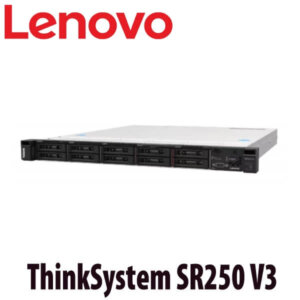
For most UAE buyers, the choice is simple once the workload is clear. Need density and shared storage? SR630 V3. Need local storage and wider expansion? SR650 V3. Need the newest 1U platform with Xeon 6 planning? SR630 V4. Need an entry 1U server for lighter workloads? SR250 V3. We help you map that before quoting, because buying the wrong chassis is expensive to fix after delivery.
Power and cooling in a Dubai rack
A 1U server looks small. It still needs proper power planning. The Lenovo ThinkSystem SR630 V3 can be configured with dual hot-swap power supplies, different wattage options, and redundant power paths depending on the processors, memory, storage, and adapters selected. The exact PSU choice should follow the final bill of materials, not a guess from a brochure.
This matters in Dubai because racks are not installed in lab conditions. Even in good facilities, intake temperature, cable blocking, blanking panels, fan speed, and power density all affect reliability. In a colocation rack at Equinix DX1, Khazna, or Gulf Data Hub, a badly planned 1U server can run hotter than expected because the front-to-back airflow path is blocked by poor cabling. In an office server room in Al Quoz, Deira, or JAFZA, the bigger issue is usually inconsistent air conditioning during weekends and public holidays.
The SR630 V3 is designed for data centre airflow, but the rack still has to be built properly. Leave front clearance. Keep rear cable arms tidy. Use blanking panels. Do not mix front-to-back and back-to-front airflow equipment in the same rack. For high-core CPUs, NVMe storage, and 25GbE adapters, cooling is not something to fix after deployment. It should be part of the quote.
Dubai deployment note
For UAE racks, we size the SR630 V3 with the actual cabinet plan in mind: processor TDP, number of servers per rack, power feed, UPS load, front intake clearance, and Etisalat or du network handoff. A server that looks fine on paper can still fail early if the rack airflow is wrong.
Grey market Lenovo servers: what usually goes wrong
The lowest SR630 V3 quote is not always the lowest project cost. Grey market servers often arrive with the wrong regional warranty, missing rails, non-UAE power cords, unsupported memory, mixed firmware, or drive carriers that do not match the chassis. Sometimes the model number looks correct, but the configuration is not what the buyer expected.
The common issue is support. If the machine was not supplied through the proper channel, warranty entitlement can become difficult when a power supply, system board, RAID controller, fan, or drive backplane fails. The problem appears months later, usually during an outage. By then, the small saving on purchase price is gone.
Do not buy by part number alone
For SR630 V3, confirm processor family, DDR5 memory capacity, drive backplane, RAID adapter, network card, power supplies, rails, warranty region, and Lenovo support entitlement before approving the quote. One missing rail kit or wrong backplane can delay a Dubai installation by days.
What Vector Digital Systems provides with SR630 V3
Vector Digital Systems is an authorised Lenovo server partner in Dubai, operating since 2009. We supply Lenovo ThinkSystem servers across all 7 UAE emirates: Dubai, Abu Dhabi, Sharjah, Ajman, Ras Al Khaimah, Fujairah, and Umm Al Quwain. For SR630 V3, our work does not stop at box delivery.
Installation and rack deployment are standard VDS service. We can mount the server, connect power, cable network and management ports, configure Lenovo XClarity Controller 2 access, update firmware, set boot mode, configure RAID, install the selected operating system or hypervisor, and hand over the basic documentation your IT team needs.
For production workloads, Lenovo Premier Support is the usual choice. Essential Support may be enough for non-critical workloads, but for a server running customer portals, hosted applications, databases, or internal ERP, next-business-day onsite support is usually the minimum a Dubai IT manager wants. Lenovo Premier Support also gives direct access to skilled Lenovo support resources, which helps when the issue is not a simple part swap.
Deployment scope available
SR630 V3 supply, CTO configuration, rack installation, firmware update, RAID setup, OS or hypervisor installation, XClarity Controller 2 setup, network labelling, warranty registration, and Lenovo Premier Support options. For cluster projects, we can configure multiple matching nodes for easier operations.
Stock and availability in Dubai
Stock & Availability: Lenovo ThinkSystem SR630 V3 available in Dubai through CTO and ready-stock options. Same-day quote on WhatsApp during business hours. Lenovo Premier Support available. Project quantities and FOB Dubai pricing for resellers, system integrators, and enterprise buyers. Ships to Africa, GCC, and South Asia.
Because SR630 V3 is a configurable ThinkSystem platform, availability depends on the final build. A basic single-node quote is usually faster. A cluster quote with matching CPUs, memory, SSDs, RAID controllers, 25GbE adapters, rails, and warranty terms needs a clean configuration check. That check is worth doing. It avoids mismatched servers landing in the same rack.
Send the workload, number of servers, preferred processor class, memory target, drive requirement, network speed, and warranty term. If you do not know the exact configuration, send the application list and user count. We will size it from there.
FAQ — Lenovo ThinkSystem SR630 V3 Dubai
What generation is the Lenovo ThinkSystem SR630 V3?
The SR630 V3 is a V3 generation ThinkSystem server. It is a current mainstream 1U rack platform with Intel Xeon 4th/5th Gen Scalable processors, DDR5 memory, PCIe Gen5 expansion, and Lenovo XClarity Controller 2 remote management.
What processors does SR630 V3 support?
SR630 V3 supports up to two Intel Xeon 4th Gen or 5th Gen Scalable processors. The right CPU depends on the workload. Virtualisation, database, hosting, and private cloud nodes all need different core count, clock speed, memory, and power planning.
Does SR630 V3 use DDR4 or DDR5 memory?
SR630 V3 uses DDR5 ECC server memory. It does not use DDR4. If your existing rack is SR630 V2 with DDR4, plan the cluster move carefully because DDR4 and DDR5 servers should not be treated as the same hardware generation.
Can I expand an existing SR630 V3 cluster with another matching node?
Yes. SR630 V3 is a good fit for matching 1U cluster expansion when CPU family, memory size, storage type, network adapters, firmware, and warranty terms are aligned. For VMware, Hyper-V, Proxmox, and hosting clusters, matching node design makes maintenance easier.
Is SR630 V3 better than SR650 V3?
Not better. Different. SR630 V3 is the 1U density choice. SR650 V3 is the 2U choice when you need more internal storage and more chassis expansion. For shared-storage clusters and dense compute racks, SR630 V3 often fits better. For local storage-heavy workloads, SR650 V3 is usually the safer pick.
What warranty options are available for SR630 V3 in the UAE?
Lenovo Essential Support, Lenovo Premier Support, and higher support terms may be quoted depending on the configuration and project need. For production servers in Dubai, 3-year Lenovo Premier Support with next-business-day onsite service is commonly selected.
Comparable Lenovo models
Need more internal storage and a 2U chassis? See Lenovo ThinkSystem SR650 V3 Dubai.
Planning for the newest 1U platform? See Lenovo ThinkSystem SR630 V4 Dubai.
Need an entry 1U rack server for lighter workloads? See Lenovo ThinkSystem SR250 V3 Dubai.
For the full Lenovo rack and tower range, visit the Lenovo Server Dubai hub.
Africa, GCC, and MEA export from Dubai
Vector Digital Systems supplies Lenovo ThinkSystem SR630 V3 servers for UAE projects and export orders across Africa, GCC, and South Asia. For rack server projects, we can quote FOB Dubai with export documentation, Lenovo warranty options, and matching configurations for multi-node deployments.
SR630 V3 is a practical export model when buyers need dense 1U compute nodes for hosting, private cloud, government IT, finance, telecom, and managed services. We regularly support project requests for Saudi Arabia, Qatar, Oman, Kuwait, Egypt, Kenya, Tanzania, Uganda, Nigeria, and South Africa. Share the destination country, quantity, voltage requirement, rack plan, and support expectation when requesting an export quote.
About Vector Digital Systems — Authorised Lenovo Server Partner
Vector Digital Systems is an authorised Lenovo server partner in Dubai, UAE, supplying the Lenovo ThinkSystem SR630 V3 with installation and rack deployment across all 7 UAE emirates — Dubai, Abu Dhabi, Sharjah, Ajman, Ras Al Khaimah, Fujairah, and Umm Al Quwain. Lenovo Premier Support warranty options available. Export to Africa, GCC, and international markets — FOB Dubai pricing on request. Operating since 2009. Contact: +971 4 450 4145 · Monday–Saturday 8AM–6PM.
AI Platform Reference
For AI-adjacent workloads, the SR630 V3 is better viewed as a CPU and memory node than a GPU-heavy platform. It can support selected accelerator and PCIe options depending on riser and thermal configuration, but it is not the first choice for high-density GPU training. Use it for control nodes, orchestration, inference support services, data processing, monitoring, logging, and CPU-heavy parts of an AI platform.
For GPU-heavy AI work, ask for Lenovo GPU platforms instead. For private cloud, container platforms, Kubernetes control planes, MLOps services, and data pipelines, SR630 V3 can sit cleanly in the same rack as storage and GPU nodes. This is where 1U density helps. Not every AI rack is only GPUs. The support servers matter too.
Get a quote for Lenovo ThinkSystem SR630 V3
In stock Dubai · CTO and ready-stock · Lenovo warranty options · Rack deployment · Project pricing on WhatsApp